Friday, 11 November 2016

95% of parents shopping online this Christmas – MumPanel 2016 Christmas Survey

With just 44 sleeps to go until Christmas it’s at the forefront of most parents’ minds. But exactly how early do they start planning and will they be spending more or less this year? We found out the answers to these questions and a few more in the MumPanel 2016 Christmas Survey. 


It’s been a tough year for lots of families and many have had to find ways to economise and make cutbacks, and Christmas is going to take a hit too. A quarter of families are planning to spend less on Christmas presents this year, but 14% are planning to push the boat out and spend a bit more. The average spend per child this year is around £180, with 10% spending over £300 and at the other end of the spectrum 10% spending under £50.

We’ve seen a marked shift to online shopping this year, with 95% of parents saying they will do at least some of their present buying online. And parents are picking up presents while doing the weekly shop – 63% saying they buy in supermarkets. We shouldn't forget the other places mums and dads go to buy – Christmas markets, local craft fairs, eBay, charity shops and local selling sites.

In 2012 we found 10% of parents had started food and drink shopping in September, but this year we found out mums and dads like to start present buying much earlier. Almost 14% love finding bargains in the January sales, the majority (47%) start in October and November. And there’s 1% of brave souls who leave it until the week before Christmas.

Retailers leading the way are Amazon (81%), Argos and Tesco for toys and games with Smyths following closely behind. Smiggle and The Range are new places for present shopping that parents didn't mention last year.  Part of the reason Argos continues to dominate is the good old catalogue – we heard in both the survey and in twitter parties that two-thirds of kids still love to sit and circle the presents they want. 
 
To round up we asked parents ‘What could brands do to help you more with Christmas shopping?’ and here are just a few of the themes that emerged – something for companies to think about for Christmas 2017? 


Price is a big issue…
  • Have a shopping list web page, with details such as recipient, ideas, and price bracket and make suggestions for each child
  • Avoid inflating prices!
  • More bargains before Christmas. (Instead of items being half price 1 week later) More deals.
  • Lower prices and more availability for the more sought after toys!
  • More toy sales like the Sainsbury's half price toy week - that was fantastic
  • Better deals, help with a guide selector by choosing age etc. & possibly telling where you can get the best deal, like a comparison site

Think beyond the price tag…
  • Toys to be advertised towards particular age groups so it was easier to pick out suitable gifts
  • Help with a guide selector by choosing age etc. & possibly telling where you can get the best deal, like a comparison site
  • Stop being stereotypical with toys, such as a craft activity, will be in a pink box or have a girl on the box, so stops me buying it for my son who would love the activity.

Authenticity matters to parents…
  • Be honest about what the toys actually do compared to what they look like they do on the advertisements. I often take my three young children into stores to show them that the sparkles were added for the advert or that the fairies don't really fly etc.
  • Being more honest with descriptions on TV ads
  • Stop nonsense adverts every 5 minutes showing expensive toys as not everyone can afford them but children do see the ads and get upset.
  • Tell the truth on adverts, they always show young toys being played with by older children. When you buy your child these toys and they get bored after the first 10 minutes it is such a waste.


MumPanel Christmas Shopping survey 2016, 590 respondents, parents with children 0-18 years

Thursday, 6 October 2016

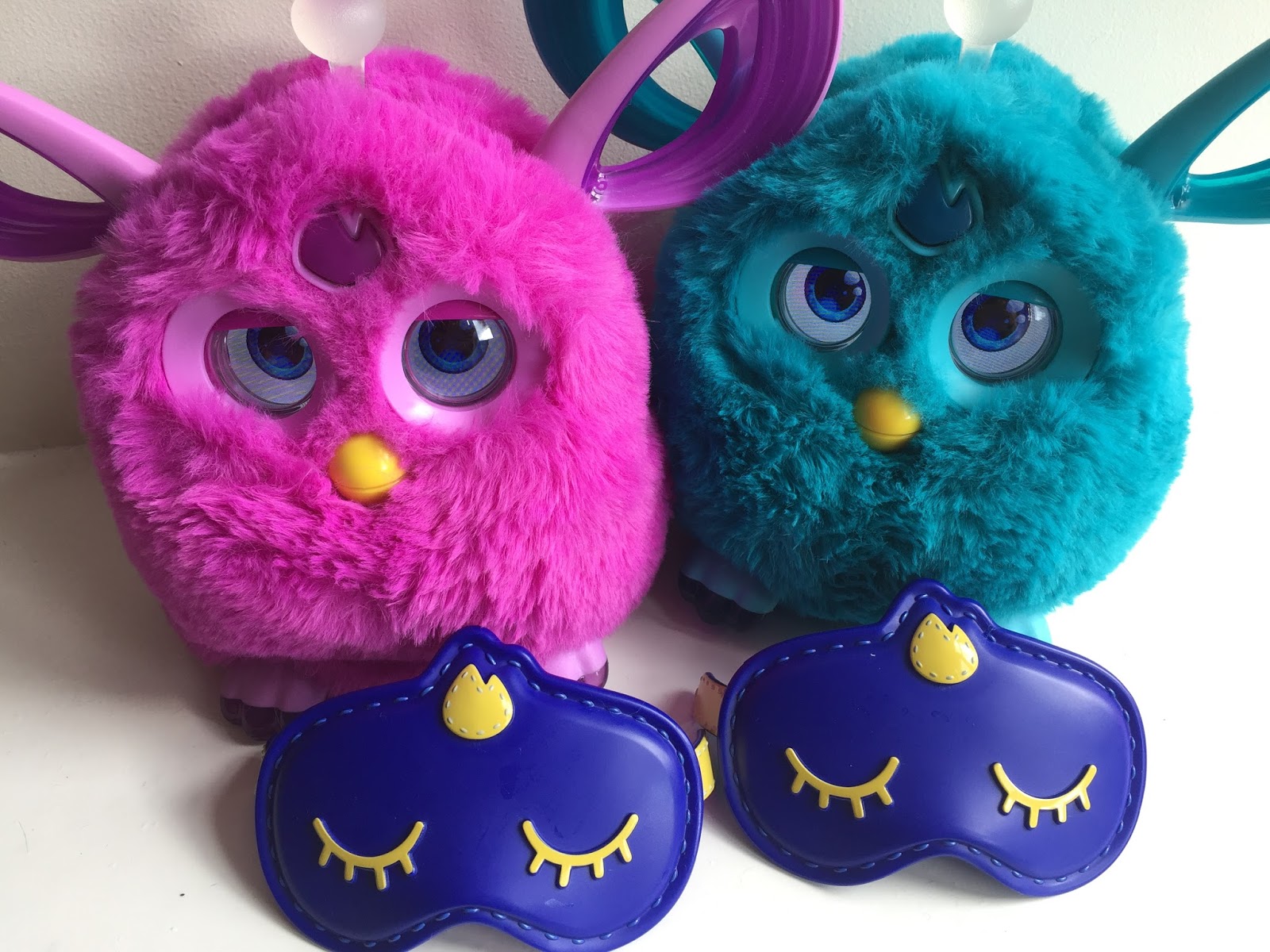
Kah toh-loo Furby Connect!


There are certain toys that stay with you. I remember my first bike, I remember my Barbie dolls (even the ones I shaved the hair off) and I definitely remember Furbies. The first Furbies appeared 18 years ago and I was well past the age when I should have been buying them, but I remember being desperate to get my hands on this weird little owl-hamster type furry creature.

Then two years ago my kids discovered Furby. They begged and begged and I caved in and got them two Furby Booms for Christmas. This was a whole new kind of Furby which could hatch an egg in an app.

So you can imagine the level of excitement in our house when we found out about the new Furby Connect. There are still all the features you love, crazy noises and chattering in Furbish (such as Kah Noh-lah aka I want to dance). But there’s so much more. For starters they have taken the toilet humour that kids love so much, and parents pretend to hate, with jazz farts when you pull Furby’s tail and pooping in the toilet on the Furby Connect app. 


The Furby cleverly interacts with the app using Bluetooth (and that leaves room for lots of clever tech development in the coming months). In the app you can feed your Furby and play games and there’s a whole other world to explore beyond the furry friend in front of you. My favourite feature (and my kids) is the theatre, where there are videos clips and songs that your Furby interacts with (these change over time).

The Furby Connect itself is a step up from the Boom, it has softer fur and eyes that light up with 150 different expressions. It’s ears move and there’s a light up antenna. It loves being tickled, which makes it giggle and instructs kids (or big kids) to do different things to keep the play and interactivity going. And they’ve fixed the ‘shut that thing up’ issue by adding a sleep mask which clips over the eyes for instant peace.

So if you’d like to get your hands on one of the must-have toys for Christmas 2016 just enter our competition below. 

https://www.surveymonkey.co.uk/r/mumpanelFurbyConnectCompetition (and you can share this blog post using the buttons below)

And if you're around today we're hosting a Furby Connect twitter party today - Friday 7th October at 1pm. Find us @MumPanel,
follow #FurbyFriday, they’ll be lots of Furby chat and another chance to win a Furby.  

(And if you're wondering Kah toh-loo means Me Like)


Friday, 16 September 2016

Speak Out – when word of mouth creates the next big thing


This time last year there was one game on everyone’s lips – Pie Face. It was the Christmas sales smash of last year, with retailers struggling to keep up with demand.

But the story of its success started several months earlier, and it was all down to word of mouth.

In April 2015 a video of a grandfather and his grandson playing the game hit the web, it was soon being shared across social media, then mainstream media got hold of it. It’s hard give an exact number of views but there are various estimates of between 88-100 million. The game was actually launched by Rocket Games in 2014 but Hasbro heard about the buzz around the video, bought the rights and launched it in 20 countries in September 2015.

It’s sometimes hard to figure out what makes something a viral success but in this case it’s clear. The video is natural and very funny, so it’s easy and safe to share, with friends and your kids (and when they love it pester power kicks in) . The game itself is simple and something the whole family can play. And it was marketed at a very pocket friendly price.

And even if you weren’t on social media or hadn’t seen it in the mainstream press mums and dads were talking about it at the school gate. People were sharing where they had seen it on sale or offering to buy it for other parents.

And this week it looks like Hasbro are about to repeat last year’s success with another hilarious (but adult-focused) board game. Speak Out was launched in June this year, after a collaboration with JoeSantagato, and we heard little about it until a video appeared on Facebook on 11th September. In 5 days it’s had 28 million views. Yes, 28 millon views.

Last night it hit my timeline and I immediately shared it, it’s funny and is similar to a game I play with my kids (taken from the game on TV programme Celebrity Juice) where you have to say words while keeping your teeth covered. Then I went to try and buy it. Amazon sold out. Argos sold out.  Every retailer sold out. And it’s changing hands for £50 on eBay (it retails at £19.99).

When I got to the school gate this morning the first thing a mum said to me was ‘have you seen that video of that new game, I wonder where you can buy it from’.

Hasbro seemed to have stumbled on an unexpected and low budget way to create cash in the till. When we’re talking to people about spreading the word we focus on letting things spread within people’s natural journeys, there’s real power in letting real people do the work for you.  And that’s especially important in a market where we’re overwhelmed with marketing and advertising messages.

There's lots of talk about using micro influencers (we prefer to call them real people) to spread a message but you have to get the content right first - and this is what's happening with Speak Out.  Maybe it's time for brands to better understand with what we connect with, what we're willing to share and why.

Thursday, 15 September 2016

I had a baby and joined a tribe


When I was pregnant with Mia I didn't worry a lot. I knew I had good friends. I knew I had great family support. Everyone I spoke to told me I’d easily combine a career working from home with childcare. I pictured long leisurely lunches with friends, I imagined gently rocking her to sleep, one foot on bouncer while I chatted away to a client. I read all the books. I knew what I was doing. I had this.

Then she was 11 days late. I was induced. I was in established labour for 24 hours. It ended in a forceps birth. She was horribly jaundiced and rushed back into hospital. I got a bad infection and ended up in hospital. I struggled to establish breastfeeding and then it turned out she was allergic to formula. We ended up in hospital again. Oh and I’d committed to delivering a project starting when she was 4 weeks old. I didn't have this. I didn't have a clue. The books didn't cover this. I had no friends with kids. My family, as awesome as they were, had their babies many years ago.

I was stuffed.

Then my antenatal ladies came to the rescue. They were my lifeline in those first few months. They were the people I shared my lows and highs with. The people I asked for recommendations from everything from bum cream to nurseries (and just about everything else in between).

So why did I go to them? Why did they replace my usual trusted network of friends (some of whom had been friends for over 20 years)?

Because they knew. They knew what it was like to wake up with a tiny screaming person 3 times a night. They knew you’d do anything to stop their tiny little stomach cramping if it meant you could eat a hot meal in the evening. They knew that having a small person utterly changes your life and perspective. And they were right with me in the moment, parenting at the same time and facing the same challenges I was facing. In some respects parenting never changes- your job is to raise a relatively normal kid that turns into a respectable-ish adult.

But then everything changes. In between having my two how you made a bottle up changed, the advice on using dummies changed. Between me and my mum having kids the landscape of raising children has changed beyond all recognition. In 1976 my mum didn't have to worry about the impact of technology on her child’s developing brain. Playing out in the street was totally normal and expected. We knew little about cot death. Brands were hardly on our radar. Antibacterial hand gel and aspartame in drinks didn't exist.

So the mums I met at that stage of my life became my tribe. The people I trusted most, whose opinions I listened to and whose advice I would take. I wanted to know what toys they’d bought, what foods they were feeding their kids and what product you could buy to wash away those mysterious orange food stains.

And even when I didn't want the advice I was always taking in what they said. I spent a lot of time with these people. And over the years although that group of mums has changed – as I moved towns and my kids moved from nursery to school  - the tribe remains integral to my decision-making.

My tribe is at the school gate, at my slimming world group, on facebook and on nights out. Each time the conversation might be different, so at holiday club pick up over summer we covered where everyone was buying school uniform, holiday destinations, kids’ hair chalk and shoes (each one coming with recommendations of where to buy). And on a night out at the pub we talk about where we’re going with our partners for nights away, new cars and beauty treatments. These are people I’d trust with my kids, so I’m likely to listen to their opinions pretty carefully.

It’s important for brands to understand that these are the people I turn to when I have to make every day purchasing decisions. I’m not thinking about what washing machine Kim Kardashian uses when my finally packs up. Think about the people your customers trust and how you can tap into that network.

We’d love to know whose opinion you trust most…

Tuesday, 23 August 2016

Smiggle – the word is spreading


“Have you been? Your two would love it”

We know there’s nothing more powerful than parent to parent recommendation, the power of conversation between two people who trust each other (92% trust friends and family recommendation over any other form of advertising). And when that power is combined with a fresh approach to the high street and something kids love we know there’s a new hit on the horizon.

 (Credit: mallcribs.com)

Smiggle. It’s where a smile meets a giggle. Either that means absolutely nothing to you and I’ve just taught you a new word. Or you’ve broken out in a cold sweat as you know exactly what it means, your kids are obsessed with it and your bank balance is suffering as a result. 

For those not in the know Smiggle are an Australian retail brand that sell colourful stationery, bags, lunchboxes and drink bottles. If you’re a stationery addict you’ll love it, if you’re the parent of a kid who is a collector or loves bright, shiny things then you’re bound to be in store very soon.

I had a teeny stationery habit when I was a teenager (I don't think a collection of 120 rubbers is too much?) which a. may have strayed into my adult life – see picture below and b. obviously is genetic as my kids have the same problem. 

My local store hasn't even opened yet so we’re off to explore the Manchester store next week…I’ve already bumped the limit up on my credit card. 


The first UK Smiggle opened in 2014 and there are now 67 stores in the UK with plans to have 220 by the end of 2018.  But you might be wondering how I heard about Smiggle when I haven’t even stepped foot in one.  It all started with that line, ‘Have you been? Your two would love it’.

Lynne (MumPanel founder) has a daughter the same age as mine and they have a common love of stationery. Lynne mentioned Smiggle in passing a couple of times over the last few weeks and then when we were discussing Christmas trends she said the Smiggle calendar would be the big thing. At this point Smiggle weren’t even on my radar, I hadn’t seen anything online and we didn't have a local store so my trusted mum friends weren’t talking about it.

So Lynne filled me in and as we were going to a meeting she pointed out the Manchester Arndale store (trust me you won’t miss it and neither will your kids!). I immediately knew that my daughters would love it but it would also be useful for me because I could get back to school kit, birthday presents for their friends and cheap pocket money treats.  Win win.

Then the power of word of mouth took over. I had information from a trusted source so I took that and shared it with my friends, who shared it with their friends. And all the time Lynne was sharing it with her friends, who shared it with theirs, and theirs and theirs. Until it’s reached thousands of people. The power of one single conversation is spreading the word about Smiggle. And it’s happening in a natural but trusted way driven by parents desire to share information.

When we work on spreading the word campaigns clients sometimes don’t understand how a small team of well-connected amplifiers can successfully get the word out there. But that’s all you need – if your product, service or concept is good the power of one conversation amplified many times over does the work for you. And although there's a trend at the moment to only talk about online and celebrity influencers you have to carefully consider where you audience are (what about those who don't have a facebook profile?) and who they really listen to. Remember that 92% of parents trust friends and family recommendation over any other form of advertising.

The power of word of mouth can be hard to harness but if you know the right people to start conversations it can create loyal customers and put more money in the till.

We’d love to hear about the products or places you heard about from other mums or your experience of Smiggle.


Wednesday, 27 April 2016

Fitbits & Sausages

This time last year mums were spreading the word and their recommendations for Aldi Prosecco. They were raving about the taste and price and telling other mums about it. So what’s getting mums talking and giving recommendations in 2016?


Fitbits

Have you done your 10,000 steps today? Mums asked for Fitbits for Christmas and birthday presents. It’s part of our attempt to get fit and keep motivated but also a way to compare sleep deprivation! It’s a talking point everywhere, from fitness classes to the school playground.

Heck

How often do you find a product that’s low fat, tastes great and the kids will eat too? Heck have filled in an unexpected gap in the market with their range of sausages and burgers. They’ve been making sausages for a long time but just a couple of years ago developed the Heck brand and have an avid social media following. Mums are making trips to certain supermarkets to source their products and ordering online. They continue to tap into what mums want with the recent launch of a vegetarian range.

Aldi’s Mamia

In the last few years the big boys, Pampers and Huggies have had to compete with supermarket own brands (Asda own nappies were a mum favourite for a long time). But now Aldi (and Lidl) are grabbing mum market share with nappies that don’t leak, are comfy and cheaper than their branded rivals. Aldi have cleverly championed their products with mums, offering quality and value.

Musical.ly

If you haven’t heard about it then ask your kids. It’s an app where you can make your own music videos. What kids seem to love is the interactive element of it. It’s a current tween craze, even though it’s only for 13+, so mums are talking about it. We’re trying to understand it, decide if our kids can use it and figure out where technology is going next.

What mums are saying about other products

“My go to at the moment is Costa coffee, and I know lots of other mums who can't do without their Costa fix.”

“At the school gate and on social media I’m hearing lots about meal replacements like Huel and C9 for weight loss. But there’s also a massive backlash against making women feel bad about their bodies and unrealistic expectations."

"My kids and their classmates are obsessed with collecting Beanie Boos. I think they are weird but as a cheap treat I’m quite happy to purchase them.”

Make sure you’ve got your ear to the mum grapevine as their trends will drive sales and footfall. And if you manage to find their sweet spot you’ll have all the word of mouth ambassadors you’ll ever need.

If you'd like to know more about how we can help you hear what mums want call us on 0161 413 4717.

Friday, 4 March 2016

‘A hug and a cup of tea’


It’s Mothers Day on Sunday (just in case you’ve forgotten!) and we asked our mums what that meant to them.

Over 90% said they celebrated it in their household and when asked what it meant to them the overwhelming response was spending time with their family and about appreciation – of their own mum, their kids and themselves. 


‘A day to realise how much I appreciate my mum and my daughter to appreciate me (hopefully!)’


With that appreciation came relaxing – with over half saying they get to relax more…


‘Hopefully a lie in!! Possibly breakfast in bed ... A day to stop & enjoy being a mum.’


However, on the flip side 50% said they didn’t get to relax anymore than usual…


‘I'm still mum!’


‘Have to fit tow family visits into one day so no one is disappointed.’


Overall the wants of mums were not commercialised or grand.  Homemade cards were at the top of the ‘hope to receive’ list closely followed by breakfast in bed and flowers. It also included kids behaving themselves, a sunny day and no hassles! Ideal Mothers Day for some mums were:


‘A long nap and a long hot and undisturbed bath’


‘Kids sleep in too so I get a cuddle and my partner then takes them off to prepare my surprise. No-one argues or fights ALL day’


‘Time with my children and my mum having a nice meal’


The brand that was most associated with Mothers Day was Thornton’s – perhaps it was a brand that stretched across the generations and was seen as traditional.


However, not every mum feels like celebrating or can, for some it is a sad time missing their mum who has passed away. For others they may not have the same support or partner to let them enjoy Mothers Day.


I think brands are beginning to (or should) link these occasions with the more emotional, and simplistic aspects, engaging with their audience more. Caring. With the philosophy of less is more - sometimes.


Brands who help with hand made cards, the ideal breakfast in bed  menu and little presents that matter will win through.


Happy Mother’s Day.


Over 1500 responses via MumPanel Survey on 9th March 2016.

Wednesday, 30 September 2015

The Sugar Summit - 5 key consumer trends


Over 3,000 UK people aged 8-90 years old took part in our in-depth sugar summit ethnographic and quantitative insight - looking at what people are really thinking and doing about sugar. Below are the key discoveries.

1. The sugar awakening 

In the last 12 months the UK government, medical governing bodies and celebrity chefs have raised concerns about the amount of sugar us Brits are consuming. This has resulted in sugar now being the top ingredient that people take note of on ingredients and 3 out of 5 adults actively making an effort to reduce the amount of sugar in their diet. People have woken up to sugar and not just to fizzy drinks and sweets but to apparent ‘hidden sugars’ in products, with 69% concerned about the amount of sugar in cereal and 40% in bread.

2. State of confusion

The sugar awakening has to led to many consumers questioning labelling on products, being confused about how much sugar they should be consuming in a day and what is deemed ‘good’ and ‘bad’ sugars - if there is such a thing. 2/3’s of people feel brands don’t clearly let consumers know about the amount of sugar in products and are confused by media messages. As one consumer said , ‘messages can be very confusing; 5 a day v’s low salt v’s low sugar v’s no additives – what advice do we take?

3. The counter revolution

The focus on sugar has led to the spotlight also being shone on the alternatives, such as sweeteners. Over the last 5 years we have heard rumblings of distrust of sweeteners, such as Aspartame, from parents. There is a growing group of consumers who would prefer products to contain sugar (64%) rather than sweeteners, as they worry about the ‘unknown’ effects of sweeteners or just prefer the taste of sugar.

4. Taking responsibility 

Many people we talked to felt responsibility for the amount of sugar we eat as a nation should be shared between the manufacturers, regulatory bodies and personal responsibility. 50% felt that people needed to take more ownership of the sugar they and their family’s consume and be active in trying to change their habits for the better.

5. Education and clarity 

The increased awareness, confusion and want to action has led to an overwhelming majority of people (96%) asking for better education on sugar in foods and drinks - for adults as well as kids. They want clearer and simpler labelling and that manufactures should reduce the amount of sugar in products gradually. Many don’t want sugar replaced with even sweeter sweeteners - instead they want the nations palette to adjust to a less sweet diet.

P.S. Overall, most people said it was about achieving a balance. They don't want to be eating ‘sugar’ free birthday cake or munching on a celery stick while watching X Factor. Sugar has it’s place and it’s an enjoyable, fun and feel good time. However, it should be in moderation.


If you would like our full Sugar Summit infographic please contact me at lynne@agentwithin.com and for more about our parent company, Agent please go to www.agentwithin.com 

Thursday, 23 April 2015

There is more to being mum

We keep hearing it, experiencing and saying it – but it’s something that’s worth repeating. There’s more to being a mum than being a mum. Behind that title of ‘mum’ is an individual, a person who has her own set of wants and needs. She has to balance that with the needs of her family but her own (often strong) preferences play into her decision-making.

We’ve just carried out some research with our MumPanel of 10,000 mums across the UK and this is what is at the top of their mind at the moment (and some of their thoughts aren’t quite as mumsy as you’d think…).

  • The election is a hot topic at the moment. We don’t tend to find mums discussing it in the playground but it’s definitely something they think about – both on a personal level and also how it might affect their family. 88% of mums said they’re going to vote in the general election but even at this late stage 45% haven’t decided who they’re going to vote for. That could mean that mums are the most influential group in determining who’s next in line for government.
  • Mums have fun and ‘me time’ too. Mums might not have bags of free time but they still manage to fit in their hobbies and interests. When we asked our MumPanel, half play sport regularly (swimming, running, netball and bootcamp). One third said they regularly holidayed without their kids, two-thirds go to comedy shows or theatre, 40% drink alcohol every week and 75% do DIY (not sure that is always fun!).  It’s not just empty nesters that have ‘me time’, so don’t forget mums when you’re marketing recreational and escape products and services.
  • Mums and kids share. Mums share products, experiences and wants with their kids.  They might buy breadsticks and yoghurts for the kids but find they like them. And so the next time they’re buying for themselves as well as the kids.  We found two-thirds of mums like the same music as their kids (Frozen sound track, McBusted, Ed Sheeran, Take That and Taylor Swift). Many go willingly (or suggest going) to concerts and shows with their children – enjoying them as much as the kids. Parents and kids share - whether consciously or not - and brands should look for opportunities for innovation and connection in this area.
  • There are many dimensions to being mum. Brands need to see the wider influences, needs and values of mums. Why? So they don’t miss important factors when developing products and service. As a brand if you dig into these deeper factors you can create better, empathetic relationships with your audience and meet ALL the needs of ‘being mum’.
All figures from survey of 600 UK mums (completed 14-20th April 2015). 

If you have any mum or family insight, innovation or communication needs call us on 0161 413 4717 or email lynne@mumpanel.co.uk

Thursday, 15 January 2015

Mum truths, tips and trends in 2015

Mum truths, tips and trends in 2015

Over the last few years we’ve talked a lot about how brands view mums. They’re often keen to try and stick them into neat little boxes, with the aim of better understanding this profitable market. But what we’ve discovered time and time again is that the opposite is true – if you try and squeeze mums into a limited profile it narrows your perspective to a point where products and communications miss the spot, or worse, damage your brand.

This idea of thinking beyond demographics now has it’s very own bit of jargon - 'post demographic consumerism’ in marketing speak and is set to be a key trend for marketers in 2015 (it was a key trend for us in 2011!).

So if you take one truth from this blog it should be this – stop thinking of mums in terms of simple (or even complex) demographics. It doesn’t work. Instead, try and really understand mums, their families and lives within their world – and what a diverse, busy and noisy place it is. Their lives are always moving on to the next life stage, dealing with the next challenges and trends to keep up with.


And here are a few other tips to help your brand connect with mums in 2015

Tap into mums emotions
If you’re a parent then you’ll probably suffer from the universal parental emotion – guilt. You might also feel a few other emotions, worry, pressure, doubt. As a brand you’re in the perfect position to address these emotions and help parents overcome them. Let mums know it’s ok not to be perfect.

See mums as a whole person
Once you have a baby you don’t stop being a person. We do have interests and hobbies too. And we care about what’s happening in the world. Engaging on more than the ‘mum’ level will help you understand how to reach mums and what they want.

Have your own voice
Look to mums attitudes and current shopping journeys for inspiration. And keep an eye on the less obvious competition.  If you want to keep ahead of the pack and be a trend-setter then you've got to really get under the skin of your consumer and competition. 

For example all the big 4 supermarkets have lost market share. And growth – it’s with the discounters – Aldi & Lidl. So that must be because they are cheap? That’s not the whole story. Waitrose have also grown (and hold more market share than Aldi). We think that’s because Aldi and Waitrose have something in common – a clear proposition, they know who they are, why their customers like them and know how to successfully engage with them. 


If you’d like to talk to us about really understanding your consumers in 2015 get in touch.  In our next blog we will look at some of the emerging mum trends for the year ahead. So, what do you want to know about mums in 2015?